




For the last decade, the tech world convinced us to move everything to the cloud. We treated our local hard drives like dusty attics, doing all our real work in browser tabs. But with the launch of Anthropic’s Claude Cowork, that trend is sharply reversing.
The industry has realized a simple truth: To be truly useful, AI can’t just live in a chat window. It needs to live where your files are.
The pivot area
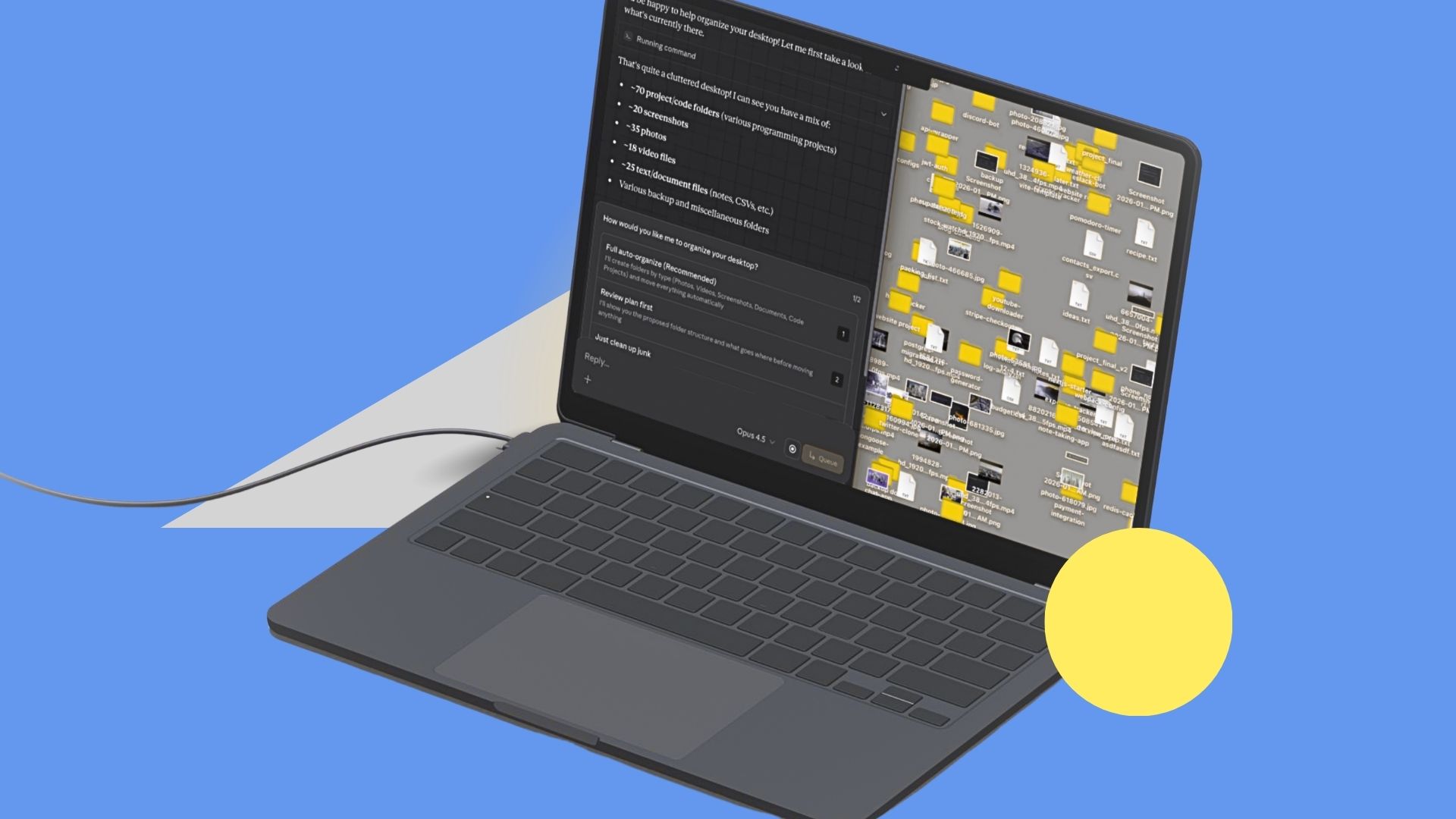
This pivot towards “agentic” systems is driven by the realization that conversational interfaces have hit a ceiling in terms of productivity. A chatbot can tell you how to organize your expenses, but an agent can open the folder, read the receipts, and generate the spreadsheet for you without constant supervision. Anthropic describes this new dynamic as less like a back-and-forth conversation and more like leaving instructions for a colleague. For enterprise leaders, this distinction is vital. The value proposition is shifting from the novelty of content generation to the utility of autonomous execution.
The speed at which this capability arrived suggests a compounding acceleration in software development costs and timelines. Reports indicate that the Anthropic team built the Cowork feature in approximately one week and a half, heavily utilizing their own coding agent, Claude Code, to write the software. This creates a recursive loop where current AI models are accelerating the creation of future AI tools. For CTOs and agency heads, this implies that the barrier to entry for building complex, bespoke internal tools is collapsing. If a major platform feature can be built in ten days, the traditional timelines for software deployment are becoming obsolete.
The migration problems
However, the migration of AI to the desktop introduces a complex security paradox that IT departments must now navigate. Moving intelligence from a sandboxed browser tab to a local file directory exponentially increases the potential blast radius of an error. Anthropic has been transparent about these risks, explicitly warning that the agent can take destructive actions, such as deleting local files, if instructions are unclear. The concept of “prompt injection,” where malicious instructions hidden in external data cause the AI to misbehave, becomes significantly more dangerous when that AI has write access to a hard drive.
The competition has new ground
This development places Anthropic in direct competition with Microsoft Copilot, yet their approaches differ fundamentally in philosophy and architecture. Microsoft is attempting to bake AI into the operating system at the kernel level, creating a ubiquitous but often intrusive presence. Anthropic is opting for a sandboxed environment where the user designates a specific folder for the AI to inhabit. This contained approach may appeal to enterprises hesitant to grant an AI full systematic access, offering a middle ground between cloud isolation and total OS integration.
The impact for modern business
The rise of desktop agents also forces a reevaluation of the “data infrastructure” required for modern business. For years, companies have focused on structuring their cloud data. Now, the messiness of local file management becomes a bottleneck. If an AI agent is to be effective, the local environment must be accessible. The Cowork feature targets this “random life admin,” such as renaming files or organizing downloads, which consumes a disproportionate amount of human cognitive load. By automating this low-level digital janitorial work, the agent frees up human capital for high-level strategy.
‘Digital intern’
Ultimately, we are witnessing the commoditization of the “digital intern.” The ability to analyze scattered notes, process receipts, and manage file structures is no longer a human task but a compute task. As these agents gain the ability to use browser automation to interact with external websites while managing local files, the distinction between the desktop and the web begins to blur. The agent becomes the browser, the file manager, and the content creator simultaneously.